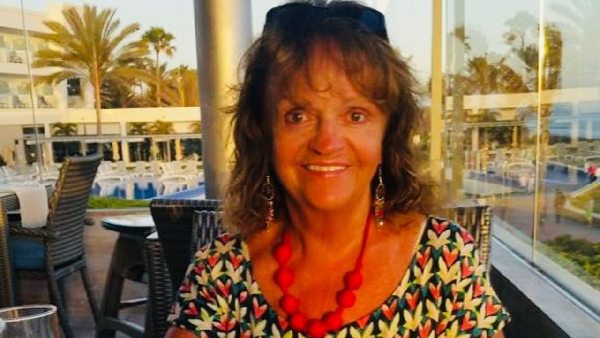
A UK inquest has heard that a 69-year-old widow, Janet Fordham, died in a road crash in Ghana after losing nearly £1 million to a string of romance scams that wiped out her savings and cost her her home.
According to multiple reports published on April 22, 2026, proceedings at the Devon Coroner’s Court revealed that Fordham had been repeatedly targeted by online fraudsters over a five-year period. The scams left her financially ruined, forcing her to sell her house and deplete her life savings.
By the time she travelled to Ghana, the retired housekeeper was living in a caravan at the Honiton home of her son, Martin, and his wife, Melanie Fordham.
How the scams began
Her ordeal reportedly began in 2017 when she joined dating platforms and met a man claiming to be a British Army sergeant major stationed in Syria. He persuaded her to send money under the guise of helping him ship gold bars to the UK. Convinced the relationship was genuine, Fordham even told her family they intended to settle down together.
Melanie Fordham said she had warned her mother-in-law against sending money.
“I told her categorically not to send him any. Janet had been sending money to him, but we didn’t find out about this until years later. I believe she gave him around £150,000,” she said.
Despite that experience, Fordham later fell victim again—this time to someone posing as a diplomat, particularly after her UK bank accounts had been frozen. Her family said they still do not fully understand how she became entangled in multiple scams.
Drawn deeper despite warnings
Melanie explained that Fordham used various methods to transfer funds, including bank payments, post office wire services and possibly even a travel agent. Eventually, both banks and the post office blocked further transactions after detecting signs of fraud.
The situation worsened when another man, identified as Kofi, contacted her. He claimed to be a doctor in Ghana who also worked part-time in a phone repair shop. He told Fordham he had found a phone containing her past conversations with scammers and offered to help her recover the lost money.
Police had attempted to intervene. Detective Sergeant Ben Smith told the inquest that officers spoke to Fordham in 2017, 2020 and 2022, advising her to cut off contact with the fraudsters and stop sending money. Despite this, she continued making independent decisions.
Even after repeated warnings, she reportedly kept transferring money abroad, including through Bitcoin and ATM withdrawals, raising further alarm among relatives.
Reflecting on the situation, Melanie said:
“Whether she was in so deep that she couldn’t accept it was all gone, she had to keep piling money in the hope of getting something back. Whether she genuinely believed what she was being told, we will never know.”
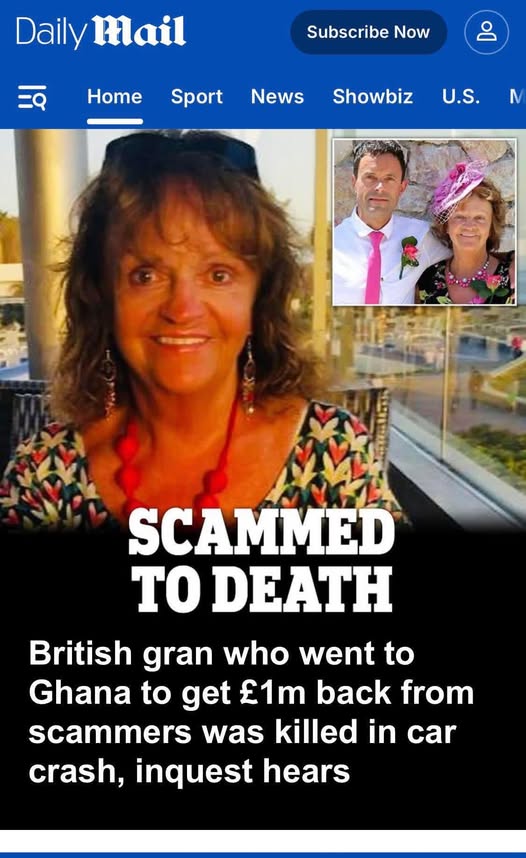
Trip to Ghana ends in tragedy
In addition to losing her savings and property, Fordham borrowed about £140,000 from family members, fell behind on loans and credit cards, and regularly withdrew the maximum daily allowance from her pension.
In October 2022, she travelled to Ghana to meet Kofi, with whom she had developed a romantic relationship. Despite her family’s efforts to stop her, she remained resolute.
“As a family, we tried everything to stop her, but she was adamant. I spoke to her doctor, sought legal advice, but because she was of sound mind, albeit brainwashed, she was deemed to have capacity and there was nothing we could do,” Melanie said.
While in Accra, Fordham and Kofi set off towards the Oti Region to seek his family’s approval for marriage. During the journey, their vehicle veered off the road and crashed, leaving her with fatal injuries.
Detective Sergeant Smith told the inquest that no third party was involved in the accident. Kofi later admitted to driving-related offences and received a suspended prison sentence along with a fine.
Delivering his conclusion, senior coroner Philip Spinney said:
“I conclude that Janet Fordham died as a consequence of a head injury that was probably sustained in a road traffic collision.”