After nearly two decades behind bars for a crime he did not commit, Ghanaian bar owner Yaw Appiah has finally received some measure of justice, this time in the form of financial compensation.
The Supreme Court has awarded GH¢800,000 to Appiah, who was wrongfully convicted and sentenced to 45 years’ imprisonment for robbery. The ruling, delivered on February 10, 2026, follows his acquittal by the Court of Appeal in January 2025, which described his case as a “tragedy.”
A Long Road To Justice
Appiah’s ordeal began in 2006 when he was arrested in connection with a violent robbery incident at Teshie-Nungua Estate in Accra. The victims, Richard Kwakye and his family, had been attacked by armed men wielding machetes and cutlasses upon returning home from the airport.
Although several suspects were arrested, Appiah consistently denied any involvement. Despite this, he spent five years on remand before being convicted in 2011 at the High Court and handed a 45-year sentence at just 29 years old.
In total, he spent nearly 20 years in detention at Nsawam Prison.
Shocking Flaws In Conviction
The turning point came when the Court of Appeal revisited the case. In a strongly worded judgment, the three-member panel found that the prosecution had failed to establish any credible link between Appiah and the crime.
“There was no direct evidence, and no circumstantial evidence that linked the appellant to the crime,” the court held.
Even more troubling were errors in the original trial. The High Court had wrongly stated that Appiah pleaded guilty, a claim the Appeal Court said was completely false. It also misrepresented witness testimonies, wrongly suggesting that key witnesses had identified Appiah at the scene.
According to the appellate judges, the trial court had “completely misapprehended the evidence,” leading to a grave miscarriage of justice.
“It is a tragedy that this appellant had been in custody since 2006 for a crime to which there was no evidence linking him,” the court declared, as it set aside both conviction and sentence.

A Fight For Freedom
Appiah’s journey to freedom gained momentum when he encountered lawyer Claudia Coleman, who took up his case and pursued an appeal despite the long delay.
On January 30, 2025, the Court of Appeal overturned his conviction, acquitting and discharging him after 19 years of wrongful imprisonment.
His legal team, including Augustines Obour and Claudia Coleman, subsequently filed for compensation at the Supreme Court under provisions of Ghana’s 1992 Constitution.
Legal Basis For Compensation
The application relied on Article 14(5) and 14(7) of the Constitution, which guarantee compensation for individuals who are unlawfully detained or wrongfully convicted.
While Appiah’s legal team calculated his losses at GH¢2,020,800, the prosecution argued for a significantly lower amount, proposing between GH¢75,000 and GH¢100,000.
Supreme Court’s Decision
A five-member panel of the Supreme Court, presided over by Justice Avril Lovelace-Johnson, ultimately settled on GH¢800,000 as fair compensation.
The panel, which included Justice Prof. Henrietta Mensa-Bonsu, Justice Samuel Asiedu, Justice Yaw Darko Asare, and Justice Kweku Tawiah Ackaah-Boafo, said the amount was guided by established legal principles, particularly precedent from the Dodzi Sabbah case.
Emotional Aftermath
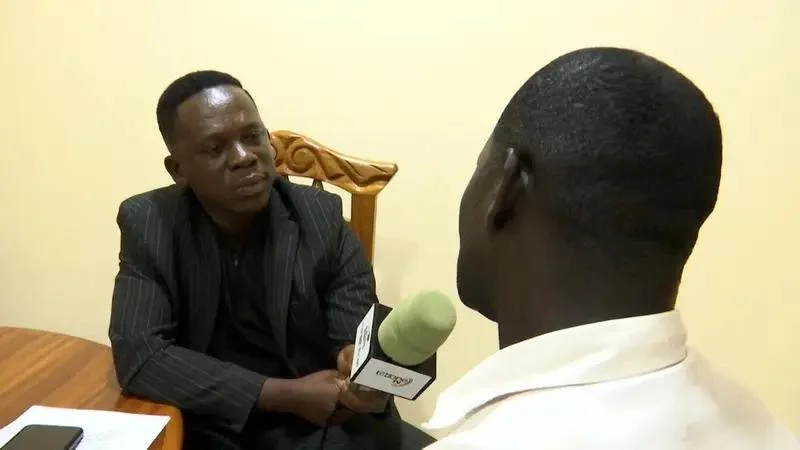
Now 48, Appiah has spoken about the emotional and psychological toll of his nearly two decades in prison. With tears in his eyes, he recounted the hardship, lost time, and pain endured while fighting to prove his innocence.
His case has reignited conversations about wrongful convictions, judicial accountability, and the need for stronger safeguards within Ghana’s criminal justice system.
A Case That Raises Bigger Questions
While the GH¢800,000 compensation offers some relief, it also underscores a deeper issue, the irreversible damage caused by wrongful imprisonment.
For Appiah, the ruling marks the end of a painful chapter. However, for many observers, it is also a sobering reminder of how easily justice can go wrong and how long it can take to make it right.