

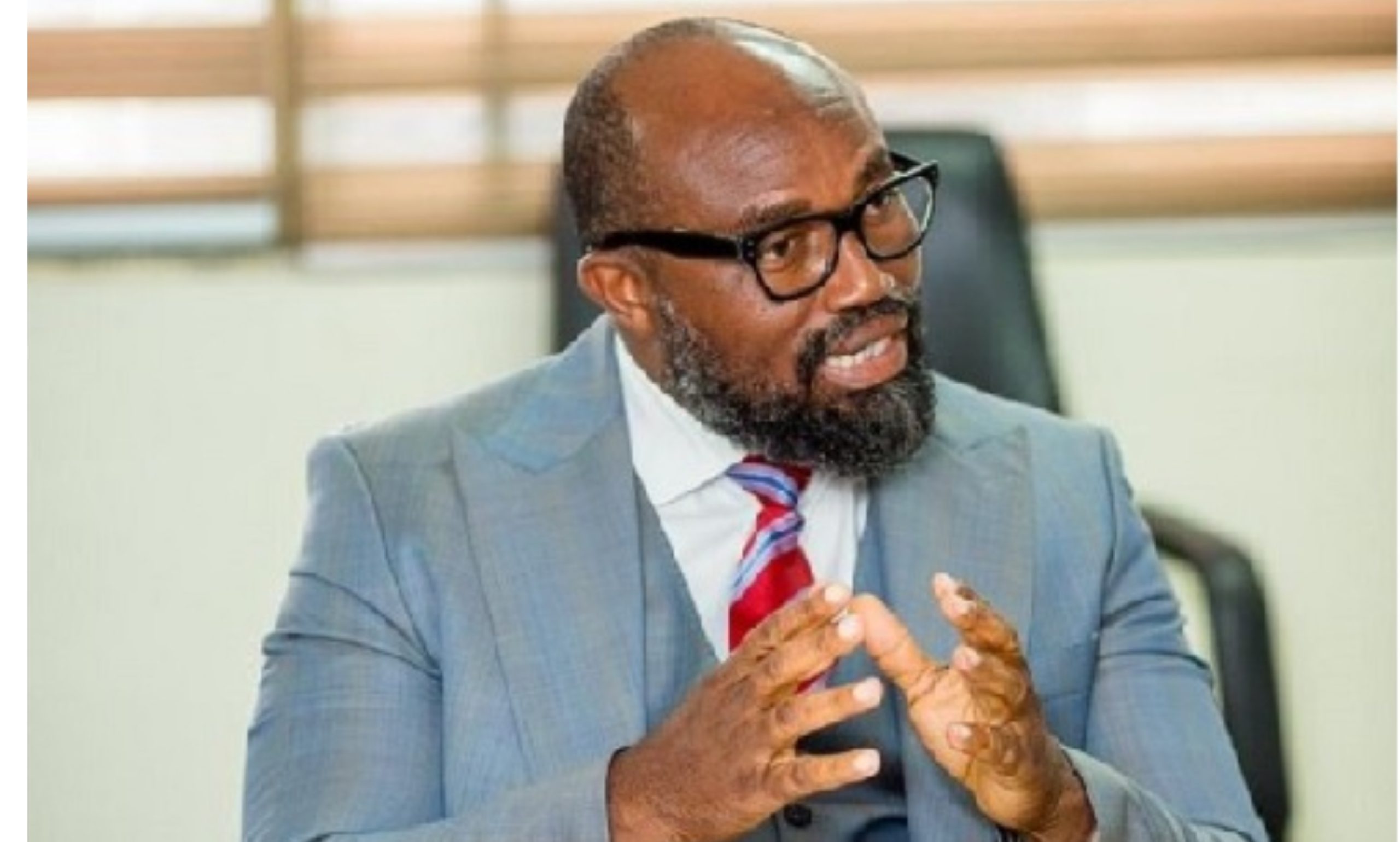
Ghanaian businessman Daniel McKorley, popularly known as McDan, has advised workers earning between GH¢2,500 and GH¢5,000 a month to focus on financial stability, skill development and asset-building rather than trying to maintain an expensive lifestyle.
In advice shared on social media on Tuesday, August 18, McKorley described the income range as a sensitive stage of life where people can earn enough to meet their needs but still struggle to build meaningful financial security.
This story falls under: Business
Follow our WhatsApp channel for more interesting and relevant news
Why McDan says this income bracket can be a trap
McKorley said people in this income range are “in the middle”, meaning they may not consider themselves poor but are also not financially free.
That position, he argued, can make it easy for money to pass through a person’s hands without creating lasting wealth.
“This is the stage where money can quietly pass through your hands and leave you with nothing to show for it,” he wrote.
His first recommendation is to stabilise basic living costs.
He urged workers to ensure that rent, food, transportation and other essential bills remain manageable before taking on additional financial commitments.
“If your rent is swallowing three to six months of your salary, you are living above your means,” he said.
The advice is particularly relevant to workers whose income rises but whose spending increases at the same time. A higher salary does not necessarily translate into greater financial security if most of the additional income is immediately absorbed by lifestyle costs.
How much will SSNIT pay you if you retire at 60?
Save first, but don’t stop at saving
McKorley urged workers to make saving automatic, treating it as a fixed financial obligation rather than something done only when money is left over.
He suggested putting aside between 20% and 30% of monthly income where circumstances allow.
For someone earning GH¢2,500, that would mean saving GH¢500 to GH¢750 each month. At GH¢5,000, the equivalent would be GH¢1,000 to GH¢1,500.
Those figures should not be treated as a universal rule, however. Rent, debt, dependants, transport costs and other household obligations can significantly affect how much a person can realistically save.
More importantly, McKorley said saving should not be the final destination.
He encouraged workers to gradually build assets and consider investment options such as mutual funds, Treasury bills, index funds, land contributions and side businesses they understand.
These options are not interchangeable and carry different levels of risk, return and liquidity. Workers should therefore understand the product and its risks before committing their savings.
The broader point in McKorley’s advice is that financial progress requires both protecting existing income and creating the capacity to earn more.
The fastest way out may be increasing your earning power
McKorley placed particular emphasis on skills.
He encouraged workers to use this stage of their careers to pursue courses, training and certifications that can make them more valuable in the labour market.
He mentioned fields including data analytics, technology, product development, cybersecurity, marketing, design and sales.
“The easiest way to escape this income bracket is not by saving alone. It is by becoming too skilled to be paid small,” he wrote.
That is arguably the most important distinction in his advice.
Cutting unnecessary spending can improve a person’s finances, but there is a limit to how much can be saved from a fixed salary. Increasing earning power creates more room for saving, investing and meeting family responsibilities without relying entirely on cost-cutting.
How StarOil Used Ghana’s RON 91 vs RON 95 Debate to Gain an Edge
Don’t let family or social pressure derail you
McKorley also warned workers against using their income to compete with other people.
He advised against impulsive purchases, expensive lifestyles and spending simply to keep up with friends or social expectations.
“At this income level, discipline determines your future,” he wrote.
He also encouraged people to maintain relationships that support personal and professional growth.
Networking, he said, should be intentional because a useful professional connection can create an opportunity that saving money alone cannot.
Family support also needs boundaries, according to McKorley.
He encouraged workers to help relatives where possible but warned against sacrificing their own financial future in an attempt to appear generous.
“You cannot rescue others by drowning yourself,” he wrote.
Ghanaians Lost $1.3 Million To Mobile Money Fraud As AI Scams Surge
McDan says there is no fixed timetable for success
The businessman also urged workers not to measure their progress against other people’s salaries.
Some people may earn GH¢2,000 for years before making a significant jump in income, while others may reach GH¢15,000 a month in their twenties.
Those different trajectories, he said, should not become a source of unnecessary pressure.
Instead, he advised workers to focus on direction rather than speed.
His advice also extends beyond money.
McKorley urged people to look after their health by eating better, sleeping properly, exercising and getting regular check-ups.
His overall message is that the GH¢2,500 to GH¢5,000 income range should be treated as a building stage rather than a destination.
The goal is to keep living costs under control, save consistently, develop valuable skills and gradually build assets.
“Build quietly, and your future self will thank you,” McKorley wrote.
McKorley is the founder and Executive Chairman of the McDan Group of Companies. The company’s current leadership page lists Lizzy-Ann Kwagbedzi as Group Chief Executive Officer.
Related Reads
- Dr Daniel McKorley Shares Powerful Message To Young People Aged 20 To 35: “The Clock Is Still Moving”
- 10 Best-Performing Companies on the Ghana Stock Market to Invest in Right Now
- How to Spot and Protect Yourself From Investment Scams: 7 Warning Signs Every Ghanaian Should Know
- Charcoal Prices Surge 50% To Become Ghana’s Biggest Driver Of Inflation, Government Statistician Reveals
Explore more:
News | Business | Entertainment | Lifestyle | Sports