


A committee set up to investigate the death of 29-year-old engineer Charles Amissah has pieced together a troubling timeline that raises fresh questions about emergency response and access to critical care in Accra.
The findings suggest that Amissah was alive throughout a series of transfers between emergency responders and major health facilities, yet died after more than an hour of unsuccessful attempts to secure definitive treatment.
Amissah, an engineer with Promasidor Ghana Limited, was reportedly knocked down in a hit-and-run incident near the Kwame Nkrumah Circle Overpass on February 6, 2026. Personnel from the National Ambulance Service were first on the scene and transported him from the accident site within minutes.
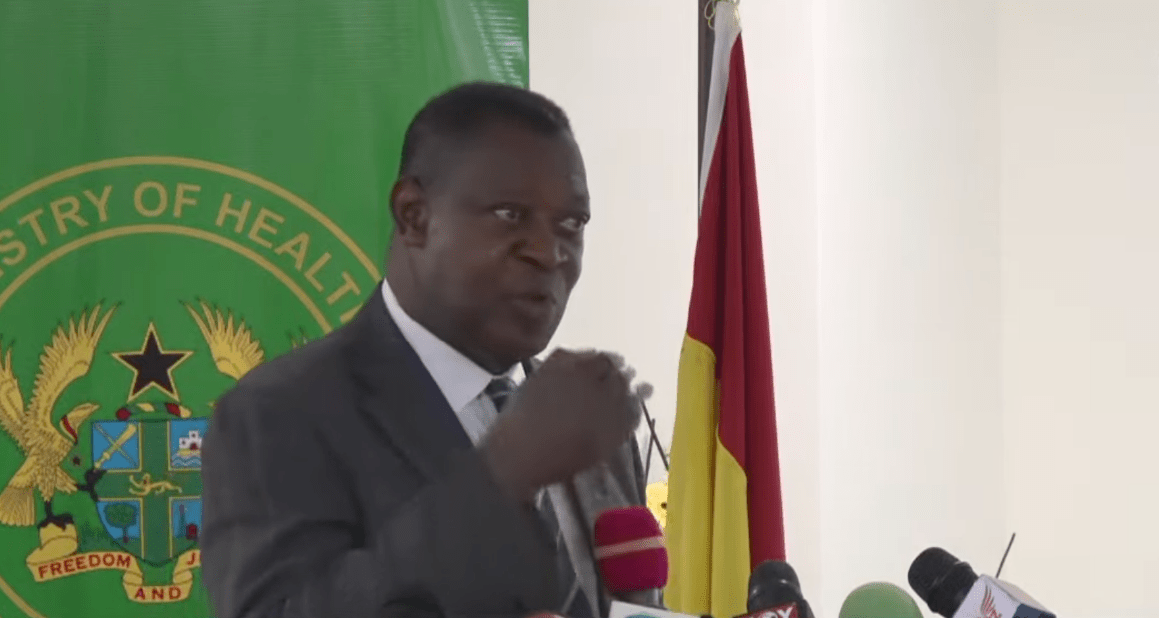
Presenting the committee’s findings, Chairman Professor Agyeman Badu Akosa described what he called a continuous chain of movement, marked by missed opportunities to stabilise the patient.
“And I think that, for me, this tells the whole story,” he said while outlining the sequence of events.
According to the committee, the incident was first recorded at 22:32. An ambulance arrived shortly after and conveyed Amissah to the Police Hospital, arriving roughly 11 minutes later. Despite the urgency of his condition, the committee found that he was not stabilised at that initial point of care.
From there, he was transferred again. At 22:58, he was moved to the Greater Accra Regional Hospital. The pattern, however, remained unchanged.
“Again, at Greater Accra Regional Hospital, they were moved on to Korle Bu Teaching Hospital,” Prof. Akosa noted.

Amissah arrived at Korle Bu Teaching Hospital at about 23:20. By this time, he had been moved across multiple facilities within less than an hour, yet still had not received definitive intervention.
“In all, this patient was alive,” Prof. Akosa emphasised.
The committee revealed that a further referral to the University of Ghana Medical Centre was considered. However, in a development that has sparked concern, the ambulance crew reportedly declined to proceed with that transfer.
“At Korle Bu, there was no joy. In fact, he was moved on to go to UGMC, but the ambulance crew refused to move,” he said.
Amissah was eventually pronounced dead at approximately 00:30, about 118 minutes after the accident.
The committee’s reconstruction paints a stark picture of a system under strain, where a critically injured patient was passed from one facility to another without receiving the life-saving care he needed.
The findings are likely to intensify scrutiny of emergency medical protocols, inter-hospital coordination, and the capacity of health facilities to respond swiftly to trauma cases in the capital.