



At just 25 years old, Jackline Osman, a University of Ghana graduate, is thriving in Ghana’s male-dominated shoemaking industry despite mockery, financial setbacks and early struggles. Her journey from political science student to full-time shoemaker shows how skills, determination and resilience can reshape career paths in Ghana.
What started as a simple skill learnt before university has now become her full-time source of income and identity as she builds her brand, Jackline O.
How Jackline Osman learnt shoemaking
Jackline Osman’s journey into shoemaking began shortly after completing senior high school, during a transitional period while she waited for university admission.
Growing up in Bawku in the Upper East Region, she had already been exposed to different forms of craftsmanship through her family, who were skilled artisans. This early environment played a subtle but important role in shaping her appreciation for hands-on creative work.
Her real interest, however, was sparked when she observed a local cobbler at work. The precision, creativity, and transformation of raw materials into finished footwear fascinated her and stayed with her.
Although her parents initially preferred that she pursue sewing instead, Jackline felt a stronger connection to shoemaking. She chose to follow her own path, even if it meant going against expectations at home.
During the period she was awaiting university admission, she made a deliberate decision to learn the skill. She used that time to train in shoemaking, gaining practical experience and building a foundation in the craft.
When she was eventually admitted to the University of Ghana to study Political Science and French, she did not abandon the skill. Instead, she continued practising shoemaking alongside her academic work, treating it as both a passion and a practical life skill.
Over time, what began as a side skill gradually evolved into a serious pursuit, eventually becoming the foundation of her career after National Service.
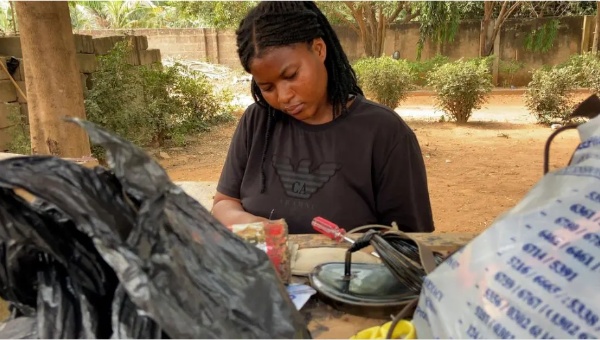
Balancing university education and shoemaking in Ghana
Jackline later pursued her degree at the University of Ghana, where she studied Political Science and French.
Even while on campus, she continued developing her shoemaking skills, balancing academic work with hands-on training.
After completing her National Service, she made the bold decision to fully commit to shoemaking.
Today, she runs her brand, Jackline O, producing handmade footwear and steadily building her reputation in the industry.
She has been practising shoemaking for about seven years, with the past two years focused fully on the business.
Facing mockery in Ghana’s male-dominated shoemaking industry
Entering a male-dominated field came with significant social pressure.
Working by the roadside exposed Jackline to criticism from people who believed shoemaking was not suitable for a woman.
She recalls some of the comments she received.
“Some guys would say, ‘Go home; I will pray for you so that you find a man to marry. You are a lady; you don’t have to be doing this work.’”
Despite such remarks, she refused to be discouraged. Support from customers and well-wishers also kept her motivated.
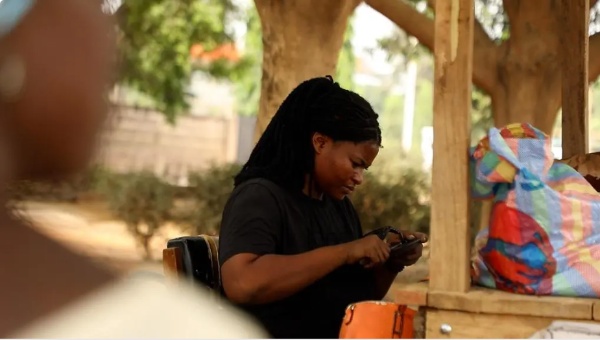
Jackline Osman‘s Determination to Keep Going Despite Pressure
For Jackline, resilience has been key to survival in the industry.
She says the negative comments she receives have never been enough to make her quit.
“None of the words people throw at me has made me want to stop shoemaking. The only time I consider giving up is when I get really tired.”
Her story reflects the experiences of many young Ghanaian women breaking barriers in traditionally male-dominated professions.
The Scam That Nearly Broke Jackline Osman
Like many young entrepreneurs, Jackline’s journey has included painful setbacks.
One of her earliest major challenges came when she received what she believed was a breakthrough order.
A customer requested four pairs of shoes and two slippers. She invested all her resources into producing them.
However, after delivery, the customer disappeared without paying.
“It was my first big order, and I invested everything I had. I made the shoes and met him for delivery, but he disappeared with the products and never paid.”
The experience was financially devastating, but it also taught her important lessons about trust and business protection.
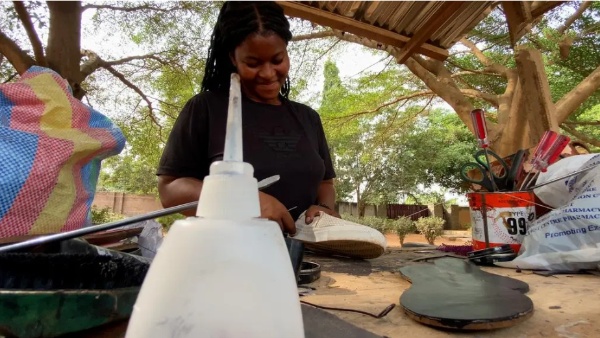
Building the “Jackline O” shoemaking brand in Ghana
Despite the challenges, Jackline has managed to keep her business running under the brand name Jackline O.
She describes the business as unpredictable, with busy periods followed by slow days.
However, she remains optimistic that consistency and quality will eventually drive growth.
Her long-term goal is to expand from a small manual operation into a fully equipped shoemaking workshop.
Why Jackline Osman Wants to Move Beyond the “Cobbler” Label
Jackline is intentional about how her craft is perceived.
She emphasises that her work goes beyond repairs and involves creating shoes from scratch.
“I want to move away from cobbling because it doesn’t allow me to focus on my craft. I want people to understand that I create shoes from scratch, not just fix them.”
For her, recognition of craftsmanship is key to changing perceptions in the industry.
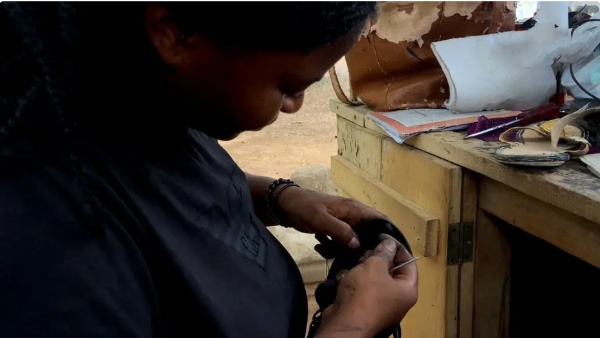
Jackline Osman‘s Vision for Growth and Expansion
Looking ahead, Jackline has big ambitions for her brand.
From a small space in her room, she now envisions a proper workshop that can support higher production and training opportunities.
However, one major challenge remains: a lack of machinery.
Most of her work is currently done manually, which limits production capacity.
“We are in a technological world. To produce more efficiently, you need machines. Right now, everything is manual, which limits how much I can produce in a day.”
She hopes to scale her business, employ others and train young people interested in shoemaking.
Jackline Osman‘s Message to Young People
Jackline encourages young women and job seekers to embrace skills and pursue practical training alongside formal education.
For her, independence is built through ability, not expectations.
Her story is a reminder that success can come from unconventional paths, especially when passion meets persistence.