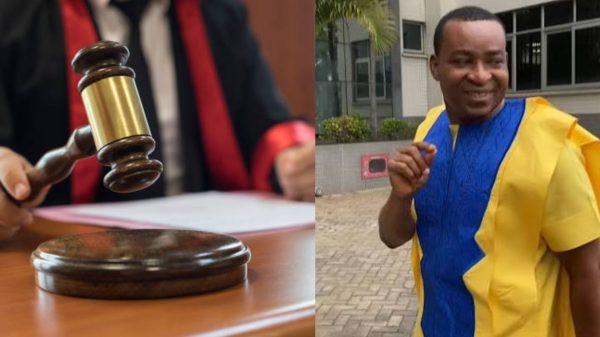


The Accra High Court has delivered one of Ghana’s most significant recent mining law judgments, sentencing Bernard Antwi-Boasiako, popularly known as Chairman Wontumi, to an effective 20-year prison term with hard labour. Beyond its political implications, the ruling clarifies key legal principles on corporate liability, mineral rights licensing and criminal responsibility under the Minerals and Mining Act, building on our earlier analysis of why the High Court rejected the Supreme Court referral and lifted the corporate veil in the Akonta Mining prosecution.
This decision could shape how future illegal mining prosecutions target company directors personally, rather than only the companies they manage, marking an important shift in the enforcement of Ghana’s mining laws.
This story falls under News
Follow our WhatsApp channel for more interesting and relevant news
What Happened: The Four Legal Principles Explained
The judgment established that:
- Company directors can be held personally liable for illegal mining carried out through their companies.
- Ministerial approval is mandatory before assigning or allowing others to work a mining concession.
- Corporate registration does not automatically protect directors from criminal prosecution.
- Machinery, gold and other assets used in illegal mining can be forfeited to the State.
The criminal trial of Wontumi and Akonta Mining Company Limited centred on whether company officers could be held personally responsible for mining activities carried out on company concessions without the statutory approval of the Minister for Lands and Natural Resources. The defence argued that work at the Samreboi site was limited to land reclamation rather than active mineral extraction. However, the High Court rejected that argument, finding that the evidence demonstrated ongoing unlicensed mining operations.
The court’s decision rests on four key legal findings:
| Legal Question | High Court Finding | Statutory or Case Reference |
|---|---|---|
| Corporate liability | Director personally liable as the company’s “controlling mind” | Morkor v Kuma [1999] |
| Mineral rights licensing | Assignment invalid without written ministerial approval | Section 14(1), Act 703 |
| Criminal punishment | 20-year prison sentence with hard labour, to run concurrently | Section 99(2)(b), Act 995 |
| Asset forfeiture | All machinery and gold confiscated by the State | Section 99(5), Act 995 |
The court’s legal reasoning included:
- Unlawful assignment of mineral rights: Under Section 14(1) of the Minerals and Mining Act, 2006 (Act 703), holders of mineral rights cannot assign, transfer or permit third parties to work a concession without prior written approval from the Minister.
- Facilitating illegal mining: Section 99(2)(b) of the Minerals and Mining (Amendment) Act, 2019 (Act 995), criminalises knowingly facilitating illegal mining and prescribes custodial sentences ranging from 15 to 25 years.
- Lifting the corporate veil: Applying Morkor v Kuma, the court ruled that where a director acts as the company’s controlling mind in committing statutory offences, personal criminal liability may arise.
- Constitutional referral rejected: The judge held that interpreting the word “facilitation” under Act 995 did not raise a constitutional question requiring referral to the Supreme Court.
Why It Matters for Corporate Governance
The judgment establishes that incorporation under the Companies Act, 2019 (Act 992), does not shield directors from imprisonment where company assets are used to commit illegal mining offences. In previous cases, companies often faced financial penalties while individual directors avoided personal criminal responsibility.
Legal observers say the decision strengthens directors’ accountability across Ghana’s mining industry and is likely to influence future prosecutions involving corporate entities accused of illegal mining. It also reinforces the government’s broader efforts to combat galamsey through stronger enforcement of existing mining laws.
For readers following the wider implications, our complete coverage of Ghana’s illegal mining crackdown and major court decisions provides additional legal and political context surrounding recent prosecutions.
What Happens Next?
Lead defence counsel for Bernard Antwi-Boasiako has confirmed that a notice of appeal has been filed at the Court of Appeal. The appeal is expected to challenge both the High Court’s interpretation of corporate officer liability and the severity of the 20-year custodial sentence.
Unless the Court of Appeal grants a stay of execution or overturns the conviction, the sentence remains legally enforceable while the appellate process continues.
Related Reads
Environmental Watchdogs Hail 20 Year Sentence for Wontumi in Akonta Mining TrialChairman Wontumi Gets 20-Year Jail Term In Illegal Mining Case
What Wontumi’s 20-Year Jail Term Means for His Ashanti Regional Chairmanship
- Church of Pentecost resorts to a synthetic rubber pool for baptism instead of river baptism due to illegal mining
- “No galamsey” chants halt government convoy at mining launch in Jomoro
- News | Business | Entertainment | Lifestyle | Sports