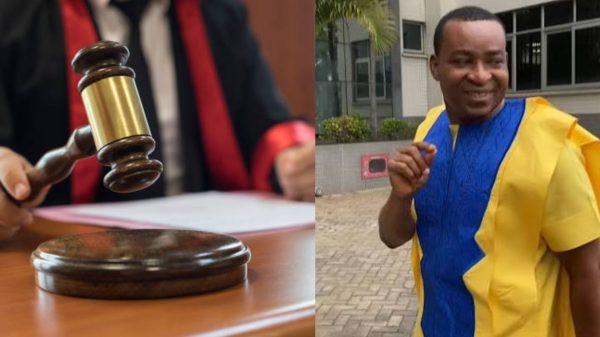


When the Accra High Court cleared the way for the extradition of alleged cyber fraud suspect Frederick Kumi, popularly known as Abu Trica, it marked more than the end of a closely watched legal battle. It highlighted Ghana’s growing role in helping international law enforcement agencies, including the U.S. Federal Bureau of Investigation (FBI), pursue transnational criminal networks.
For years, Ghana and parts of West Africa were frequently exploited by cybercriminal groups, money launderers and organised crime networks looking for places to operate across borders. Today, Ghana is increasingly becoming a partner in dismantling those same networks through intelligence sharing, extraditions, asset recovery and stronger financial crime laws.
The shift has been driven by a series of major operations involving Ghanaian authorities and international agencies, resulting in arrests, extraditions and investigations involving millions of dollars in alleged criminal proceeds.
This story falls under News
Follow our WhatsApp channel for more interesting and relevant news
By the numbers
- 3 major international fraud cases involving Ghana-linked suspects have attracted global attention in recent years.
- More than $112 million has been linked to major fraud investigations involving Ghanaian suspects and international partners.
- More than $15 million in cryptocurrency assets was traced and recovered through specialised investigations in 2025.
- Ghana’s cooperation now involves agencies including the FBI, UK National Crime Agency (NCA), Interpol and the United Nations Office on Drugs and Crime (UNODC).
The extraditions changing Ghana’s reputation
Ghana’s changing role is most visible through a number of high-profile extradition cases.
Abu Trica: The AI-powered fraud case
Frederick Kumi, popularly known as Abu Trica, became one of the most prominent examples of Ghana’s cooperation with U.S. authorities.
U.S. prosecutors allege that Kumi operated an international criminal network that used artificial intelligence tools to create fake identities and carry out sophisticated romance scams targeting elderly Americans.
The alleged scheme reportedly defrauded victims of more than $8 million.
Following his arrest in Ghana, Kumi challenged attempts to extradite him to the United States. His legal team argued against the transfer, leading to a prolonged court process.
However, the Accra High Court dismissed his challenges. On July 6, 2026, the court rejected a final emergency application seeking to stop his extradition, allowing authorities to proceed with his transfer to face U.S. charges.
The case demonstrated that Ghana’s judicial system was willing to support international investigations while allowing suspects to exercise their legal rights.
How the Abu Trica extradition battle unfolded in Ghana
Dada Joe Remix and the inheritance fraud scheme
Another major case involved Joseph Kwadwo Badu Boateng, popularly known as Dada Joe Remix.
U.S. authorities accused Boateng of being involved in a decade-long romance and inheritance fraud scheme that operated between 2013 and 2023.
According to prosecutors, victims in Arizona and other U.S. states were allegedly persuaded to pay fake taxes and administrative fees in order to receive non-existent inheritances involving gold and jewellery.
Boateng was arrested in Ghana in May 2025 after a U.S. federal warrant was issued against him.
He was later extradited to the United States, where the U.S. Department of Justice announced on June 30, 2026, that he had pleaded guilty to conspiracy to commit wire fraud and agreed to pay $4.4 million in restitution.
The case showed how investigations launched across continents can eventually lead to criminal accountability.
The $100 million business email compromise network
Ghana also played a role in disrupting a major international business email compromise network.
The operation involved cooperation between the FBI, Interpol, Ghana’s Economic and Organised Crime Office (EOCO) and the Ghana Immigration Service.
Seven suspects were arrested, including alleged ringleaders Isaac Oduro Boateng, known as Kofi Boat, Inusah Ahmed, known as Pascal, and Derrick Van Yeboah, known as Van.
U.S. authorities accused the group of targeting companies and individuals through sophisticated fraud schemes that generated more than $100 million in losses.
The suspects were extradited to face federal charges in the Southern District of New York.
The investigation highlighted how modern financial crimes are no longer restricted by national borders, making international cooperation essential.
352 Ghanaians lose over GH¢3.4m to online investment scams as CSA issues fresh warning
Ghana’s fight against organised crime goes beyond cyber fraud
Ghana’s partnership with international agencies is not limited to online crime.
Authorities have also intensified efforts against organised environmental crimes, particularly illegal mining networks accused of damaging forests and water bodies.
Operations involving the Ministry of the Interior, the Ghana Police Service, EOCO and mining regulators have targeted both local and foreign suspects allegedly involved in illegal mining activities.
The government has also relied on international cooperation frameworks, including provisions under the United Nations Convention against Transnational Organised Crime, to improve intelligence sharing and joint investigations.
The broader goal is to prevent criminals from exploiting borders to escape prosecution.
Why international agencies are working more closely with Ghana
The increase in cooperation has been supported by reforms aimed at strengthening Ghana’s financial intelligence systems.
After implementing anti-money laundering reforms, Ghana was removed from the Financial Action Task Force (FATF) grey list, improving confidence in the country’s ability to monitor illicit financial flows.
Partnerships with the UK National Crime Agency, blockchain intelligence companies and regional anti-money laundering bodies have also expanded Ghana’s ability to track digital assets and investigate complex financial crimes.
In 2025, specialised cooperation helped trace and recover more than $15.1 million in stolen cryptocurrency assets, supporting efforts to return funds linked to international crimes.
Ghana has also introduced stronger rules for virtual asset providers and improved electronic Know Your Customer requirements for financial transactions.
These measures have made it harder for criminals to hide behind anonymous digital transactions.
What Ghana’s new role means
Ghana still faces significant challenges, including cyber fraud, illegal mining and other forms of organised crime within its borders.
However, recent extraditions, investigations and asset recovery efforts suggest a major shift in how the country is viewed internationally.
Ghana is no longer seen only as a place exploited by transnational criminal networks. It is increasingly becoming one of the countries helping international agencies investigate, disrupt and prosecute those networks.
If this momentum continues, Ghana could strengthen its position as one of West Africa’s most important crime-fighting partners in the years ahead.
Related reads
- Abu Trica extradition puts spotlight on 17 Ghana-linked individuals in U.S. fraud cases
- Dada Joe Remix Pleads Guilty In US Romance Fraud Case, Agrees To Repay $4.4 Million
- US government sends strong warning to fraudsters worldwide: “We will find you and claw back every dollar”
- 352 Ghanaians lose over GH¢3.4m to online investment scams as CSA issues fresh warning
- 11 Former Presidents and Prime Ministers Who Went from Power to Prison
- Top Boy Star Micheal Ward Cleared Of Rape And Sexual Assault Charges After Trial
Explore more:
News | Business | Entertainment | Lifestyle | Sports