



After more than 14 years of research, scientists have officially confirmed a new monkey species hidden deep within the rainforests of the Democratic Republic of Congo (DRC). The primate, named Colobus congoensis and locally known as Likweli, is only the fifth new monkey species identified in Africa in the past 75 years, making the discovery a significant breakthrough for wildlife science and conservation.
This story falls under: Lifestyle
What scientists discovered
An international team of researchers from Florida Atlantic University, the City University of New York Graduate Centre and institutions in the Democratic Republic of Congo confirmed the species after years of field observations, genetic testing and anatomical comparisons.
The monkey is easily recognised by its glossy black coat, striking orange-cream lips and facial markings, large folded ears, long tail and deep roaring call. Researchers say these distinctive features set it apart from every other known African colobus monkey.
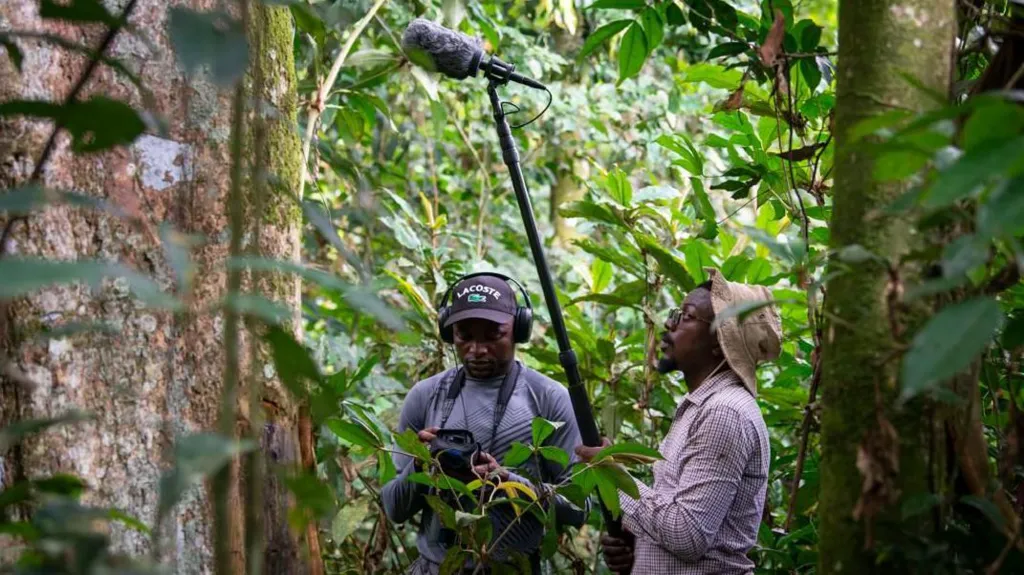
Conservationists first photographed the unusual primate in eastern DRC in 2008, but the image was too unclear to prove it represented a previously unknown species. A second sighting a decade later prompted an extensive field study, during which researchers recorded 114 sightings between 2018 and 2022.
Scientists also examined skulls, skeletons, pelts and DNA samples from museum collections before confirming that Colobus congoensis is genetically distinct from all other African colobus monkeys.
“The discovery of Colobus congoensis is reshaping our understanding of African monkey evolution,” said study senior author Kate Detwiler of Florida Atlantic University.
For more conservation stories, read our coverage of Dove’s Unusual Taboos: The Volta Community Where Childbirth, Burials and Animal Rearing Are Forbidden
Why the discovery matters
The discovery offers fresh insight into how African primates evolved over millions of years.
Researchers found that Colobus congoensis diverged from its closest known relative, Colobus satanas, around four to five million years ago, despite the two species now living more than 1,200 kilometres apart.
Scientists also believe the monkey plays an important role in maintaining healthy rainforest ecosystems by feeding on leaves and helping disperse seeds.
The finding is especially significant because only five new monkey species have been identified in Africa over the past 75 years, highlighting how much of the Congo rainforest remains scientifically unexplored.
Conservation concerns and what comes next
Despite the excitement surrounding the discovery, researchers warn that the species could already be at risk.
The monkey has so far been recorded across a range of about 1,700 square kilometres, with most known populations living inside Lomami National Park.
Scientists have proposed that Colobus congoensis be classified as Endangered, citing its restricted habitat, ongoing forest loss and hunting pressure.
The research team now plans to carry out wider population surveys and behavioural studies to better understand the species and support long-term conservation efforts before its numbers decline further.
Related reads
- 10 African countries Ghanaians can visit without spending too much money
- How Clay Pots Along The Accra-Aflao Highway Built A 25-Year Pottery Business In Ghana
- Dove’s Unusual Taboos: The Volta Community Where Childbirth, Burials and Animal Rearing Are Forbidden
- Inside Ghana’s thriving bead industry: How artisans in Amrahia turn recycled glass into cultural treasures
- Maryland lawyer shares how she balances law career with life as a Ghanaian fetish priestess in the US
Explore more
News | Business | Entertainment | Lifestyle | Sports