


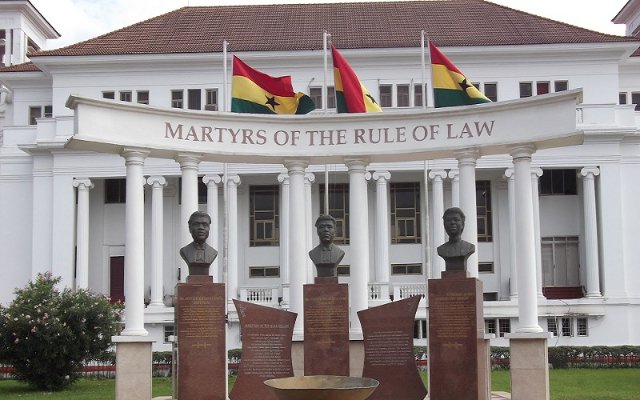
The jail sentence of The Herald publisher Larry Dogbey has revived one of Ghana’s most misunderstood areas of law: contempt of court, a legal power used by the judiciary to enforce respect for court orders and protect the integrity of justice. In Ghana, contempt is governed mainly by Article 126(2) of the 1992 Constitution and Order 50 of the High Court (Civil Procedure) Rules, 2004. It may result in fines or imprisonment where a court finds deliberate disobedience or conduct that undermines judicial authority.
👉 This story falls under News
Contempt of court is not about punishing disagreement with judges. It is about ensuring that court processes are obeyed and that justice is not obstructed. The law applies to everyone, including journalists, public officials and private citizens, whenever their conduct interferes with the administration of justice.
What contempt of court means in Ghana
Contempt of court refers to any act that disrespects the authority of the court or obstructs the administration of justice. In practice, Ghanaian courts treat it as a tool to enforce compliance and preserve public confidence in the legal system.
It becomes most visible in situations where individuals ignore court orders, publish material that interferes with ongoing cases, or make statements that risk undermining judicial proceedings.
Courts repeatedly emphasise that the power of contempt exists to protect the rule of law, not to settle personal disputes.
Civil contempt and criminal contempt explained
Ghanaian law generally recognises two broad categories of contempt.
Civil contempt
This arises mainly from failure to obey a court order.
Common examples include:
- Breaching an injunction
- Continuing publication after a restraining order
- Ignoring court directives or judgments
This is the form most often seen in media-related disputes, where reporting continues despite a court order stopping publication.
Criminal contempt
This involves conduct that attacks or undermines the authority of the court itself.
Examples include:
- Statements that scandalise or insult the judiciary
- Public commentary that prejudices ongoing trials
- Behaviour that disrupts court proceedings or weakens public confidence in the courts
While both forms can lead to punishment, criminal contempt is generally treated as more serious because it directly challenges the authority of the justice system.
What courts look at before punishing contempt
Before finding someone guilty of contempt, Ghanaian courts typically assess several key factors:
- Whether there was a clear and enforceable court order
- Whether the person had knowledge of the order
- Whether the breach was intentional or accidental
- The impact on the administration of justice
- Whether the conduct risks undermining public confidence in the judiciary
In media-related cases, courts often examine the tone, framing and timing of publications to determine whether reporting crossed the line into interference with judicial proceedings.
Why journalists are sometimes involved
Journalists are not singled out by the law, but they are more likely to appear in contempt proceedings because of the nature of their work.
This includes:
- Reporting on active court cases
- Publishing allegations involving public figures
- Commenting on judicial proceedings in real time
- Working under tight deadlines in digital news environments
However, Ghanaian courts consistently draw a distinction between:
- Legitimate reporting and commentary on public matters, which is protected, and
- Disobedience of court orders or prejudicial publications, which may trigger contempt proceedings
Penalties under Ghanaian law
There is no fixed statutory penalty for contempt of court in Ghana. Instead, courts decide punishment based on the severity of the offence and the surrounding circumstances.
Possible outcomes include:
- Fines
- Short-term imprisonment
- Committal to prison in serious cases
- Orders to retract or apologise
- Suspended sentences, depending on mitigating factors
Custodial sentences are generally reserved for cases the court considers wilful, repeated, or particularly damaging to judicial authority.
Why contempt of court remains controversial
Contempt of court sits at the intersection of two important democratic principles: judicial authority and freedom of expression.
Supporters of strong contempt powers argue that:
- Court orders must be obeyed to maintain the rule of law
- Judicial processes must be protected from interference
- Public confidence in courts must be preserved
Critics, however, argue that:
- The law can sometimes be interpreted broadly
- It may have a chilling effect on investigative journalism
- It raises difficult questions about criticism of public institutions
This tension explains why each high-profile contempt case tends to trigger national debate.
The bottom line
Contempt of court in Ghana is a legal safeguard designed to protect the authority and functioning of the judiciary. It is not intended to shield judges from criticism, but to ensure that lawful orders are respected and justice is not obstructed.
However, because the line between permissible reporting and unlawful interference can sometimes appear thin, each case continues to reopen a broader national conversation about press freedom, accountability and the rule of law in a constitutional democracy.
Related reads
- Before Larry Dogbey, These Ghanaian Journalists Were Jailed For Contempt
- Accra High Court explains why Larry Dogbey was jailed for contempt
- 👉 Explore more: News | Business | Entertainment | Lifestyle | Sports